Avast Security For Mac Unable To Scan Files
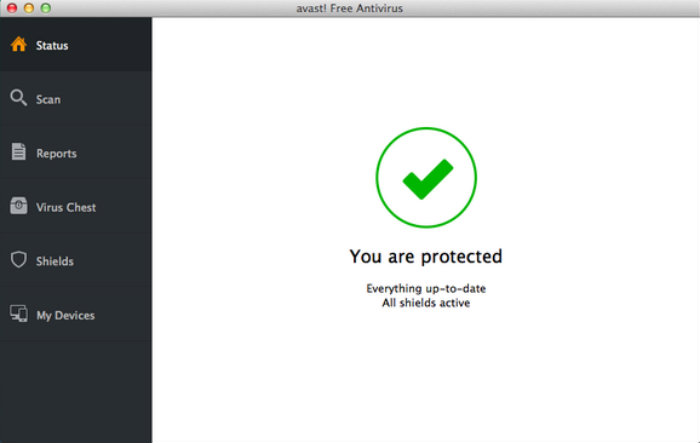
In the Avast Reports screen, the Unable to Scan message indicates that a complete scan was not performed on the number of files specified. Encrypted files, ZIP archives, and system files which are in use often cannot be scanned. Avast Mac Security 2015 provides Mac users with three defensive shields: Web and Mail Shields for incoming data and the File Shield to scan the user’s hard drive. These shields are the processes that are checking your Mac for potentially threats.
- Avast Security For Mac Unable To Scan Files For Virus
- Run Avast Scan Now
- Avast Mac Unable To Scan
- Mac Unable To Scan Resource Busy
Security products which label themselves 'antivirus' normally have the core essential features only, but Avast Business Antivirus is a rare exception, with almost as much functionality as many full security suites.
There's the core antivirus engine, behavior monitoring, and real-time file, email and download scans, for instance. You also get an intelligent firewall, a spam filter, plus smart blocking of malicious URLs. Not to mention a Wi-Fi Inspector looking out for network vulnerabilities, a sandbox which runs dubious apps in an isolated environment, shielding the rest of your PC, and a bootable rescue environment that helps to remove even the most stubborn and stealthy threats.
The price is reasonable at £21.43 ($27.86) per year for a single computer (Windows, Windows Server or Mac), with discounts available as you add users and extend the subscription period.
For example, a 10-user, three-year license costs £337.60 ($439), or £11.25 ($14.63) per PC per year. A big business can cover 200 devices for three years for £4,049.60 ($3,115), or £6.75 ($8.78) per PC per year. You could get basic coverage for less, and more powerful products such as Kaspersky's Endpoint Security can cost considerably more, but Avast Business Antivirus is fairly priced for what you get.
If you need more power, Avast Business Antivirus Pro extends the package with automatic updates of common software, a secure data shredder, and more. Prices start at £26.79 ($34.83) per PC per year.
The top-of-the-range Avast Business Antivirus Pro Plus throws in a browser clean-up tool, webcam protection, a password manager, and an Avast SecureLine VPN subscription, and is priced from £32.66 ($48.74).
If you'll use the VPN, that's a very good deal. A 10-device, two-year license for Avast Business Antivirus Pro Plus costs £434.10 ($564), for instance. Private Internet Access is one of the cheapest VPN providers around, but it still charges $69.95 (£53.80) for a single user, two-year license.
Whatever you buy, all packages can be installed and controlled from the individual endpoint, or managed remotely from a cloud console – it's your call.
Setup
Avast Business Antivirus is available as a 30-day trial build which you can download immediately. Avast doesn't demand your company name, location or phone number – just your name and email address.
Setup can be very simple. Download, run, and work through the wizard, accepting all the defaults, and it's over in less than a minute.
Hit the Customize button, though, and it's a very different story. Avast gives you complete control over which features to install and which to leave out, very handy for business users who are running the package alongside other security tools.
Compatibility is a highlight, too, with the package still installing on anything from Windows XP SP3, Windows Server 2008 R2 or macOS 10.9 and later.
Install absolutely everything and the package could grab around 1GB of drive space. That's bulkier than some of the competition, but not enough to affect most users. It doesn't hog too many system resources, either. Avast uses four background processes, but they'll typically grab only around 90-100MB of RAM between them.
Browsing Avast's files showed the package included elements from Chromium, OpenVPN, OpenSSL and more. All its files, folders and processes seem to be properly protected, and we were unable to disable or disrupt the program with our simple test attacks.
Features
Avast Business Antivirus uses the same familiar interface as Avast's home user product. An opening screen displays your current security status and can run a multi-purpose Smart Scan with a click, while tapping buttons on a left-hand sidebar opens panels where you can access other functions and features.
Click the initial Smart Scan button and Avast runs a quick antivirus check and looks for network vulnerabilities. This detected and removed our test malware, then listed all the devices connected to our network, and even identified an unnecessary open port on our router, and all in around 45 seconds – impressive.
If you have a small or stable network, you might not want to have Avast scan your network every time it runs an antivirus check. Customizing the Smart Scan to remove the network audit helps to improve scan speeds, and you can still manually launch a network scan whenever you like.
Opening the Scans panel gives you further options to run a full system scan, check specific files or folders, or schedule a boot-time scan. You can also check files, folders and drives directly from the Explorer right-click menu.
One particular highlight here is the ability to create hugely configurable custom scans. If you need something which will only run an in-depth scan of Office documents in specific folders, for instance, you could build and save it in just a few seconds. This then appears on the Other Scans page, allowing you to launch it whenever you like, or you can schedule your scans to run automatically, even when you're not around.
A separate Rescue Disk feature creates a bootable environment for cleaning badly infected systems. Avast can write this directly to a USB key, or save it as an ISO image for burning to CDs or DVDs, or for use with your preferred tools.
Avast Business Antivirus scans downloads and filters dangerous URLs from its core engine, without needing to rely on browser extensions. This does an excellent job of protecting you from malicious sites, and also has many configuration options. If web scanning slows you down or causes problems in some situations, for instance, you can disable it for specific URLs, file or MIME types, or turn it off for particular browsers or processes. Even if you never intend to use any of that, it's good to know those options are available to help you avoid any conflicts later.
Avast Business Antivirus automatically scans POP3, IMAP and NNTP (newsgroup) messages for spam, phishing threats and malware. This should work with any client, although Outlook users will also find an Avast Antispam section added to the Office ribbon. The filter has been very successful in previous reviews, with it detecting 85% of spam last time, but for some reason, this time around it refused to do anything at all.
Avast's firewall can mostly be left entirely on its own to automatically detect your networks, monitor applications and intelligently allow or block connections. We found this made smart decisions, comparable to the top-quality firewalls from Bitdefender and Symantec. But experienced users may be able to improve performance even further by tweaking individual packet rules and customizing a few other settings.
The network features continue with Real Site (formerly known as Secure DNS), a handy option which configures your system to use Avast's secure encrypted DNS system. This is designed to protect you from DNS hijacking, where an attacker might redirect traffic to a malicious site which looks just like the original. But as a bonus, it also prevents snoopers from using DNS traffic to monitor your browsing activities.
Avast's Sandbox enables running suspect files in a secure virtual space where they can't infect or damage your real PC. Most users would be better off not running suspect files at all, ever, but it's a useful feature for those who know what they're doing.
Finally, the Wi-Fi Inspector runs a quick scan of your network, listing connected hardware, their IP addresses and device type. That could be useful all on its own, as a way to spot unauthorized devices using your network. After that the module highlights security holes such as weak passwords, or routers that are accessible from the internet, and gives you a little help on how these issues can be fixed.
Protection
AV-Comparatives' Real-World Protection Test ranks the performance of 18 top antivirus engines against the very latest threats. The August 2018 report placed Avast in a disappointing 12th place, with a protection rate of 99.5%. If you think that sounds reasonable, keep in mind that the top nine packages all protected against 100% of threats.
Individual results can be misleading, so we also checked the combined February-June 2018 reports, a summary of five separate tests. Avast averaged a slightly lower protection rate of 99.4%, but still made it into 9th place, and the package wasn't far behind some other big names (Symantec was 7th with 99.5%, McAfee 6th with 99.6%, Avira 5th with 99.7%.)
AV-Test's July-August 2018 Windows Business test showed fractionally better results, with a perfect 100% protection rate in August, and an average 99.55% in July. This isn't great – AV-Test says the industry average is 100% – but it's not bad, either, and it was high enough that Avast scored 6/6 for protection, and was one of those given the Top Product award for that test.
Independent lab tests are in-depth and very long-term, and there's no way we can begin to match their level of detail in a single review. But we were also keen to find out a little more about the package with a small test of our own.
We've created a simple ransomware simulator which spiders through a folder tree, searching for and encrypting potentially thousands of common document and file types. As this executable is our creation, Avast won't have seen it before, and can't recognize the file by its signature alone. So this makes for an interesting test of Avast's ability to recognize ransomware by behavior alone, and how quickly any threat can be stopped (the slower the response, the more files may be lost).
We killed our internet connection to make the test more difficult, and launched our simulator. Avast Business Antivirus displayed an alert warning it was scanning the program, looking for malware, before eventually giving it a clean bill of health. The simulator was then allowed to run to completion, encrypting thousands of files in our test folder tree.
That's plainly not good, and other vendors have done much better. Bitdefender and Kaspersky's engines not only detected and killed our simulator based on its behavior alone, they also recovered the very few files it had time to encrypt, ensuring we didn't lose any data at all.
Still, it's important not to read too much into these results. Bitdefender and Kaspersky did well to spot our simulator, but missing it doesn't necessarily mean an antivirus program is poor. We already know from the independent testing labs that Avast can detect and block most real-world threats from their behavior alone, and those are the figures which matter most.
Final verdict
This is a versatile endpoint protection tool with a highly configurable antivirus, an intelligent firewall, smart network scanning and some top-quality features. Lab testing results aren't as good as we'd like, but it's still a capable package which deserves a place on your shortlist.
- We've also highlighted the best antivirus
Avast Antivirus provides a range of scans to protect your PC from malware. You can also create your own scan and specify the parameters. Refer to the sections in this article for details about the following Virus Scans:
- Smart Scan: a comprehensive scan that detects malware, out-of-date software, browser add-ons with poor reputations, network threats, and performance issues.
- Full Virus Scan: a predefined, in-depth scan of your system that checks your storage drives and memory for malware (including rootkits).
- Targeted Scan: scans the folders you select when you initiate the scan.
- Boot-Time Scan: scans your PC during the next system startup before any malware is launched. Running a Boot-Time Scan during startup improves the chances of detecting and removing malware before it can attack your PC.
- Custom scans: scans your PC according to the parameters that you specified for your scan.
- Explorer Scan: scans specific files or folders directly from your desktop via File Explorer.
Run a scan
- Open the Avast user interface and go to Protection ▸ Virus Scans.
- Run your preferred scan:
- Smart Scan: Click the Run Smart Scan button.
- Full Virus Scan: Click the Full Virus Scan tile.
- Targeted Scan: Click the Targeted Scan tile, then select the file or folder you want to scan, and click OK.
- Boot-Time Scan: Click the Boot-Time Scan tile, then click Run On Next PC Reboot.
- Custom scans: Click the Custom scans tile, then click Scan Now on the panel for the scan you want to run.
Create a custom scan
To create a custom scan:
- Open the Avast user interface and go to Protection ▸ Virus Scans.
- Click the Custom scans tile.
- Click Create A New Scan.
- Define the scan parameters. The following parameters are available:
- Scan name: type a name for your scan into the text box.
Customize your scan
- Scan type: select either Full Virus Scan or Targeted Scan depending on what you want your scan to check on your PC.
- Frequency: define how often your scan runs.
Advanced settings
- Sensitivity (Medium by default): the higher the sensitivity, the higher the protection and potential for false positive malware detection. Lower sentivity reduces the potential for false positive detections, but may reduce the effectiveness of the scan.
- Scan for potentially unwanted programs (PUPs): enables Avast to scan for programs that are stealthily downloaded with other programs and typically perform unwanted activity.
- Follow links during scan: enables Avast to scan other files used by the files being scanned for potentially harmful content.
- Test whole files: enables Avast to scan entire files rather than only the parts typically affected by malicious code.
- Scan priority: use the drop-down menu to set your Scan priority (Medium priority by default).
Scan areas
- All Harddisks: enables Avast to scan all hard drives on your PC.
- System drive: the options in this section apply to data that is stored on physical devices such as hard drives and USB sticks.
- All Removable media: enables Avast to scan applications that launch automatically when you insert a USB or other removable device into your PC. Scanning removable media may take a long time due to speed limitations.
- Rootkits: enables Avast to scan for hidden threats in the system.
- CD-ROM & DVD drives: enables Avast to scan CD and DVD drives for malicious content.
- Modules loaded in memory: enables Avast to scan applications and processes that launch after system startup or run in the background.
Packers and Archives
- Scan most common used types: archive commonly used file types such as .zip, .rar, and other executable or installer archives.
- Scan all types of archives: the scan analyzes all archive files, which significantly increases the scan duration.
- Don't scan archives: disables Full Virus Scan from scanning archive files.
File Types
- Content based types (slow): scans files that are typically most vulnerable to malware attacks.
- Name extension based types (fast): scans files with only risky extensions, such as .exe, .com, .bat.
- Scan all files (very slow): scans all files on your PC for malware.
- Perform automatic actions during this scan: tick this option to enable it, then define the automatic action Avast will perform when an infected file is found.
- Shut down computer after scan finishes: enables Avast to shut down your PC after your scan completes.
- Generate report file: enables Avast to create and store a report file automatically after the scan completes.
- Exceptions: click View exceptions, click Add Exception, then locate a file, folder, or web page that will not be scanned by your new custom scan.
Parameters for new Custom scans will save automatically and can be reconfigured at any time. To run a new Custom scan, go to Protection ▸ Virus Scans ▸ Custom scans, then click Scan Now next to the scan you want to run.
Process scan results
After a scan completes, Avast displays all found issues. You can resolve the issues directly on the results screen, or configure each Virus Scan to resolve issues automatically upon detection.
Avast Security For Mac Unable To Scan Files For Virus
Smart Scan
To learn more about resolving found issues after Smart Scan completes, refer to the following article:
Other Virus Scans
You can define how each scan automatically reacts to a found issue.
Avast or avg for mac reddit. For Mac users, Avast offers two separate security suites: Avast Security and Avast Security Pro. Avast Security is the company’s free offering for Mac users. It includes anti-malware security, a WiFi scanner, and also protects against web- and email-based threats. Probably the best two antivirus softwares available for our devices are Avast and AVG. AVG: AVG or Anti-Virus Guard offers antivirus and internet security software for Microsoft Windows, Linux, Mac OS X and FreeBSD computing platforms. If you put a gun to my head and made me put those in order of best to worst though, I'd have to say Avira, Avast, and AVG. My two cents, the best anti-virus is Common Sense 2014. But if you absolutely need protection, look into ESET NOD32. Avast Free Mac Security. When it comes to Avast Free Mac Security, Avast and AVG belong to the same Avast family. Avast is one of the largest security companies in the world and protects over 400 million customers in more than 150 countries worldwide.
- Open the Avast user interface and go to
☰Menu ▸ Settings. - Click Protection in the left panel, and ensure Virus Scans is selected.
- Click the scan you want to define automatic behavior for.
- Scroll down, tick the box next to Perform automatic actions during this scan, then select which action you want Avast to perform when an issue is found. The following actions are available:
- Fix automatically: Avast attempts to repair the file. If unsuccessful, the file is moved to the Virus Chest. If that fails, Avast deletes the file.
- Move file to Virus Chest: Avast sends the file directly to the Virus Chest where the file cannot harm your system.
- Delete file: Avast permanently removes the file from your PC.
If you want Avast to do nothing when an infected file is found, untick the box next to Perform automatic actions during this scan (not recommended). To manage unresolved scan detections at any time, go to Protection ▸ Virus Scans ▸ Scan history.
Special cases
For incomplete scans, an error message indicating the reason the scan was unable to complete is visible on the scanning screen. Although there are many different reasons a scan may be unable to complete, some of the most common reasons are:
- Archive is password protected: indicates that the file is password protected. Some programs use password protected archives to store their data even if you did not set the password. Depending on your scan settings, only the 'wrapper' file is scanned while the archive content is not.
- Archive is corrupted: indicates that the file may be corrupt because it was only partially downloaded or saved to your harddisk, or that it is a special type of archive.
- The process cannot access the file because of another process: indicates that another process or program was accessing the file during the scan.
- The file is a decompression bomb: indicates that the file was too large to be decompressed for malware analysis. Decompression of large files generates vast amounts of data which can cause your system to be unstable or cause it to crash.
Adjust scan settings
Although customizable settings are available for some Virus Scans, we recommend you only modify settings for Custom scans. To configure scan settings:
- Open the Avast user interface and go to Protection ▸ Virus Scans.
- Click Settings (the gear icon) in the top-right corner of the Virus Scans screen.
- Select the scan you want to adjust settings for.
- Configure your preferred settings.
For more information about Virus Scan settings, refer to the following article:
Create and use Rescue Disk
If you suspect your PC is infected with malware and all other Virus Scans (including the Boot-Time scan) were unable to resolve the issue, you can use Rescue Disk. Rescue Disk enables you to scan your PC when your system is not running. This method significantly increases your chances of detecting and removing malware because the malware is detected before it is able to counteract.
For more information about Rescue Disk, refer to the following article:
Review scan history
Run Avast Scan Now
To review scan history:
- Open the Avast user interface and go to Protection ▸ Virus Scans.
- Click Scan history.
- Hover your cursor over a scan panel, then click the down arrow to see the scan details.
Avast Mac Unable To Scan
Click the red X in the top-left corner to return to the main Virus Scans screen.
- Avast Premium Security 19.x
- Avast Free Antivirus 19.x
- Avast Omni 1.x
- Avast Premier 19.x
- Avast Internet Security 19.x
- Avast Pro Antivirus 19.x
Mac Unable To Scan Resource Busy
- Microsoft Windows 10 Home / Pro / Enterprise / Education - 32 / 64-bit
- Microsoft Windows 8.1 / Pro / Enterprise - 32 / 64-bit
- Microsoft Windows 8 / Pro / Enterprise - 32 / 64-bit
- Microsoft Windows 7 Home Basic / Home Premium / Professional / Enterprise / Ultimate - Service Pack 1, 32 / 64-bit